Walk into a guitar shop and you will be hit with words like "solid spruce top", "dreadnought" and "cutaway". Most of it matters far less than you think. A first guitar has one job: to be comfortable and easy enough to play that you keep picking it up.
Steel strings or nylon?
| Steel-string acoustic | Nylon-string (classical) | |
|---|---|---|
| Sound | Bright, loud, the classic folk and pop sound | Warm, soft and mellow |
| On your fingers | Firmer; fingertips take a few weeks to toughen | Gentler on fingertips |
| Neck | Slimmer, easier for chord shapes | Wider and flatter |
| Best for | Strumming, folk, pop, sessions like ours | Classical, flamenco, fingerstyle, younger players |
If you want to strum along at sessions, a steel-string acoustic is usually the right choice.
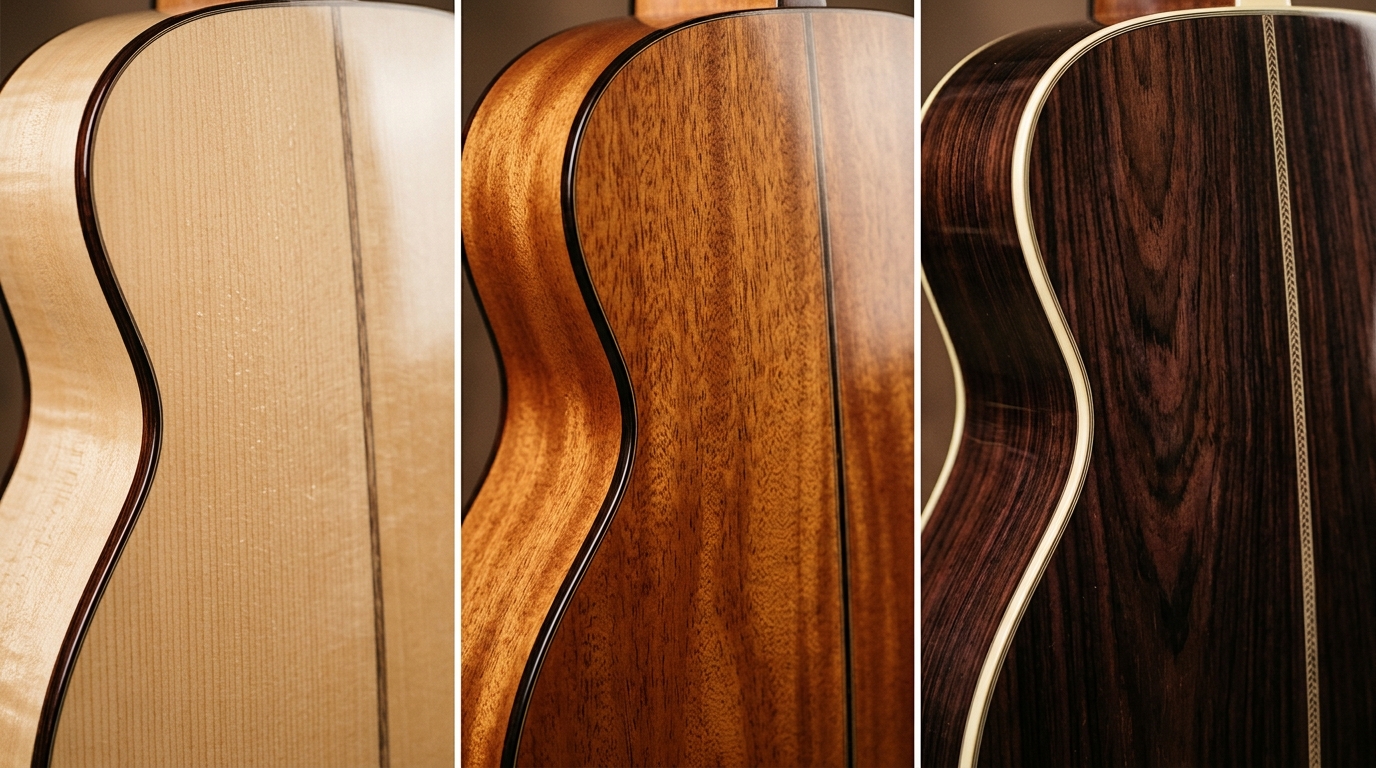
Body size: comfort first
| Size | What it is like | Good for |
|---|---|---|
| Travel / ¾ size | Small and light, quieter | Younger or smaller players, travel |
| Parlour | Small, comfortable, sweet tone | Sitting and playing at home |
| Concert / auditorium | Medium, balanced, comfortable to hold | Most adults — a great all-rounder |
| Dreadnought | Large, loud, big bass | Strumming and playing with others |
Try before you buy
Sit with the guitar for a few minutes. Can you reach over the body comfortably? Does your strumming arm feel natural? If it feels awkward in the shop, it will feel awkward at home.
New or second-hand?
Both can be great. A reputable shop will usually check and adjust a new guitar before you take it home. Second-hand can be excellent value, but check it carefully — or take a guitar-playing friend along.
- Neck: look down it from the headstock — it should be straight, not twisted.
- Action: the strings should not sit too high off the fingerboard, especially around the 12th fret.
- Cracks: check the top, back and sides, especially around the soundhole and bridge.
- Bridge: it should be flat to the body, not lifting at the back edge.
- Frets: play every fret on every string and listen for buzzes or dead notes.
- Tuners: they should turn smoothly and hold their tuning.
- Solid top vs laminate: a solid wood top usually sounds richer and improves with age; laminate is tougher and fine for beginners.
- Cutaway: a scooped section to reach high frets — nice to have, not essential.
- Electro-acoustic: has a built-in pickup so you can plug into a PA — useful if you plan to perform.
- Left-handed: left-handed players should try a true left-handed guitar; many shops stock them.
A cheap guitar with a good setup often plays better than an expensive one without.
Acoustic Club SessionsThe secret upgrade: a setup
A "setup" is when a guitar technician adjusts the neck, string height and intonation so the guitar plays as easily as possible. A cheap guitar with a good setup will often play better than an expensive one without. If chords feel like hard work, a setup is the best money you can spend.
What else you need
- A clip-on tuner (or a free tuner app)
- A few plectrums — thin to medium is easiest for strumming
- A capo — you will use it constantly
- A gig bag or case to protect it
- A stand so it is always out and ready to play
Got your guitar?
Start with the ten essential chords and our 30-day practice plan.