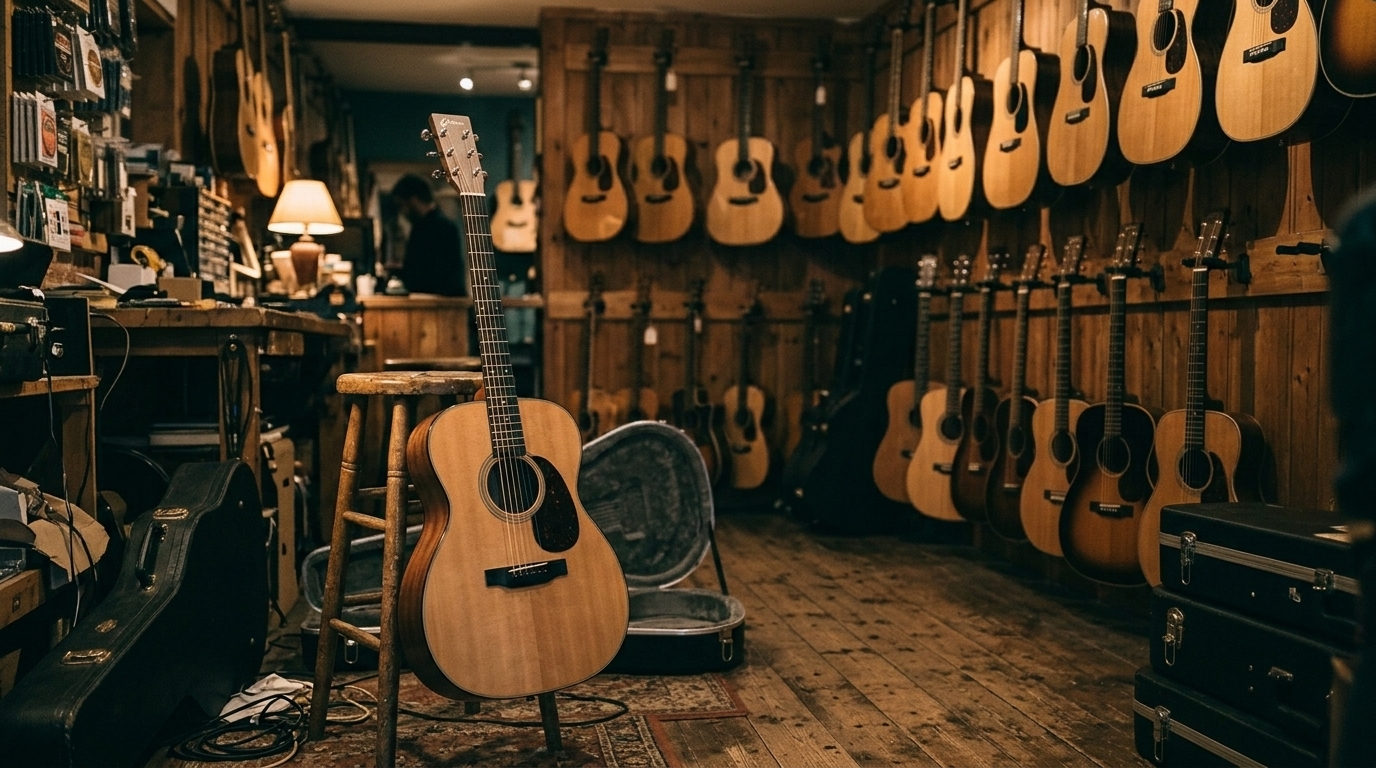
Acoustic guitars are made of thin, carefully dried wood, and wood responds to the air around it. In winter, two things work against your instrument: dry air from central heating, and sudden changes in temperature. Neither is a disaster if you know what to look out for.
Why winter is hard on guitars
Cold air holds less moisture, and heating it up indoors makes it drier still. As the air dries out, the wood in your guitar slowly gives up moisture and shrinks slightly. Most guitars are happiest in a room with relative humidity of roughly 45–55%. A heated house in January can easily fall well below that.
Warning signs your guitar is too dry
- Sharp fret ends sticking out from the side of the neck as the fingerboard shrinks
- Strings sitting lower and buzzing more than usual
- A dip in the top of the guitar just behind the bridge
- Fine cracks in the top or along the grain — if you spot one, take it to a repairer promptly
Get a cheap hygrometer
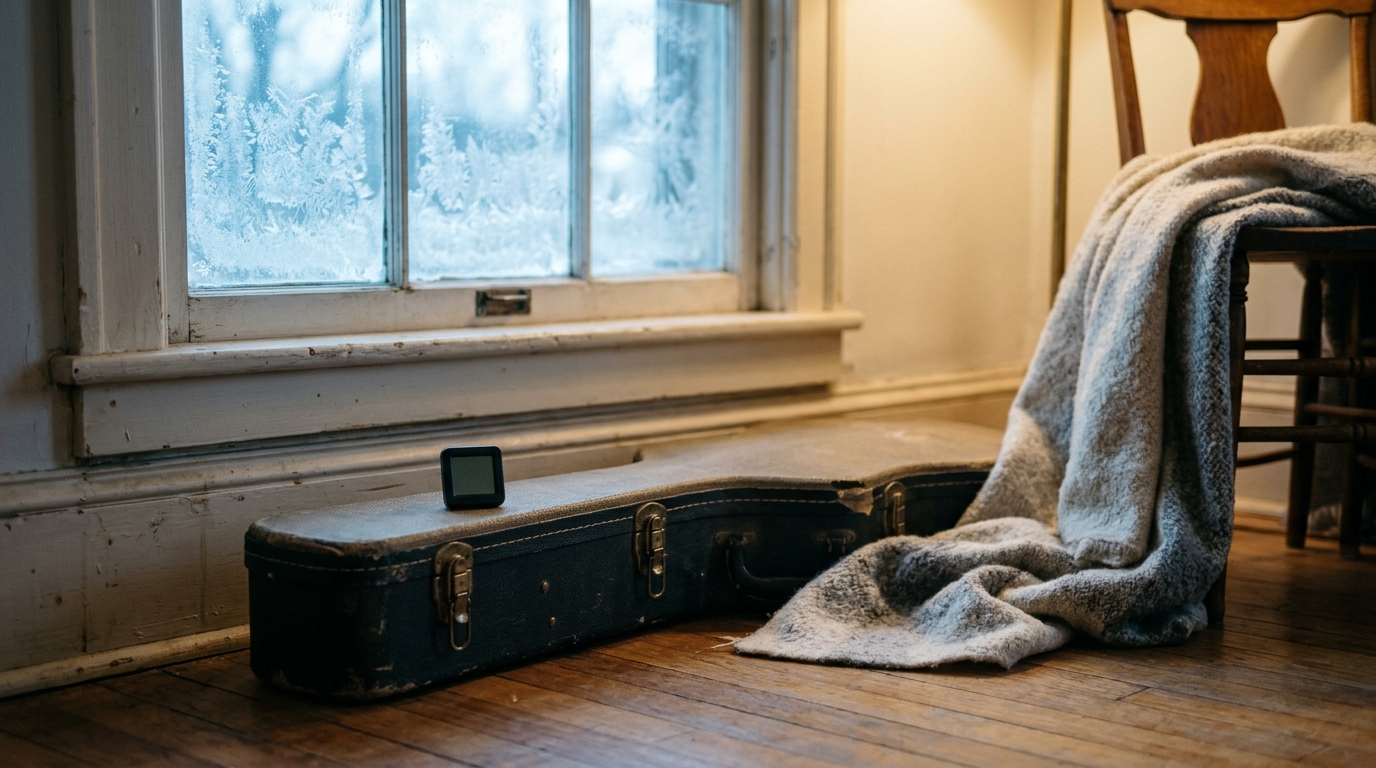
A small digital hygrometer costs a few pounds and tells you the humidity in the room or inside your guitar case. It takes the guesswork out completely.
Simple ways to protect it
- Keep it in its case when you are not playing. A case creates a small, stable environment that changes far more slowly than the room.
- Use a humidifier if your room is very dry — a soundhole or case humidifier for the guitar itself, or a room humidifier if you have several instruments.
- Stay away from heat sources. Never hang or lean a guitar near a radiator, fire or heater vent, and avoid outside walls that get cold.
- Do not leave it in the car. Freezing boots and hot cars are both bad news.
Keep it in its case — a case changes far more slowly than the room.
Acoustic Club SessionsComing in from the cold
If you have carried your guitar through a cold evening, leave it in its closed case for at least half an hour once you are indoors before you open it. That lets it warm up gradually. Opening a freezing case in a warm, heated room is how finish cracks happen.
Everyday care
Wipe the strings and neck with a dry cloth after you play — it removes sweat and oils and makes strings last much longer. Change your strings when they sound dull or feel rough; for most people who play regularly, that means every couple of months. And if your guitar has become hard to play, a professional setup is one of the best-value upgrades you can buy.
Keep it playing
The best way to look after a guitar is to play it. Bring yours along to a session.