Every song on this page is in the public domain — traditional tunes and classical melodies whose copyright expired long ago. That means you can learn them, print them, teach them and play them at any session without worrying about permission.
They are arranged roughly in order of difficulty, and every song has a Guitar and a Keyboard version — just pick your instrument in each song.
How to read the chord charts
Chords are shown in square brackets just before the word or syllable where you change. For example, in A-[G]mazing you play G on "-mazing".
Guitarists will need G, C, D, Em, Am and G7 — see our chord guide — plus the patterns from our strumming article.
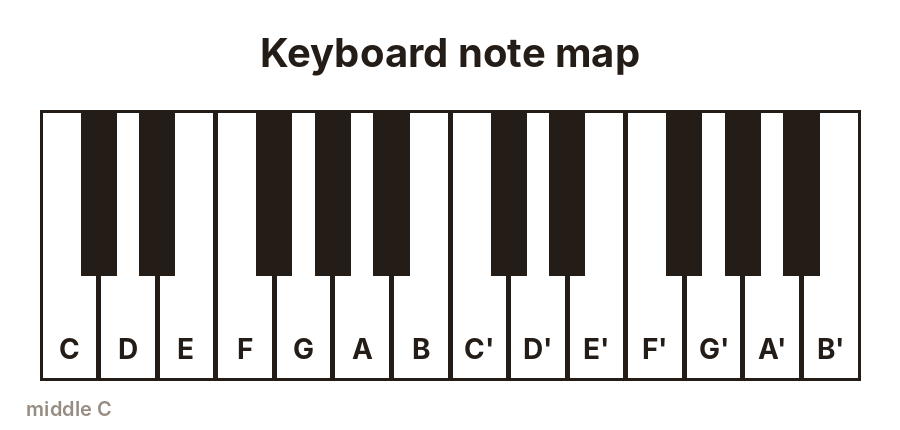
Reading the keyboard parts
Your right hand plays the melody using the note letters. Plain letters start from middle C; letters with an apostrophe (C') are in the octave above. Your left hand holds the chord shown in brackets in the words, using the chord diagrams.
1. Ode to Joy
Beethoven, 1824 · Melody · Beginner. Each note is one steady beat.
Played entirely on the top two strings. Use your index finger for fret 1 and your ring finger for fret 3.
Melody tab
Line 1
e|-0--0--1--3-|-3--1--0----|----------0-|-0-------|
B|------------|----------3-|-1--1--3----|----3--3-|

Line 2
e|-0--0--1--3-|-3--1--0----|----------0-|---------|
B|------------|----------3-|-1--1--3----|-3--1--1-|
Right hand only, in the five-finger position: thumb on middle C, then one finger per white key up to G. You never need to move your hand.
Right-hand melody
Line 1   E E F G | G F E D | C C D E | E D D
Line 2   E E F G | G F E D | C C D E | D C C
2. Twinkle Twinkle Little Star
Traditional melody · Words: Jane Taylor, 1806 · Beginner.
The fret 5 notes are A — use your little finger, or slide your hand up. Keep every note the same length.
Melody tab
Twin-kle, twin-kle, lit-tle star,
e|-------3--3-|-5--5--3-|
B|-1--1-------|---------|

How I won-der what you are.
e|-1--1--0--0-|---------|
B|------------|-3--3--1-|

Up a-bove the world so high,
e|-3--3--1--1-|-0--0----|
B|------------|-------3-|

Like a dia-mond in the sky.
e|-3--3--1--1-|-0--0----|
B|------------|-------3-|

Twin-kle, twin-kle, lit-tle star,
e|-------3--3-|-5--5--3-|
B|-1--1-------|---------|

How I won-der what you are.
e|-1--1--0--0-|---------|
B|------------|-3--3--1-|
Start with your thumb on middle C. The A is one key above G, so stretch your little finger up a step.
Right-hand melody
Twin-kle, twin-kle, lit-tle star,   C C G G | A A G
How I won-der what you are.         F F E E | D D C
Up a-bove the world so high,        G G F F | E E D
Like a dia-mond in the sky.         G G F F | E E D
Twin-kle, twin-kle, lit-tle star,   C C G G | A A G
How I won-der what you are.         F F E E | D D C
3. Amazing Grace
Words: John Newton, 1779 · 3/4 waltz time · Chords G, G7, C, Em, D.
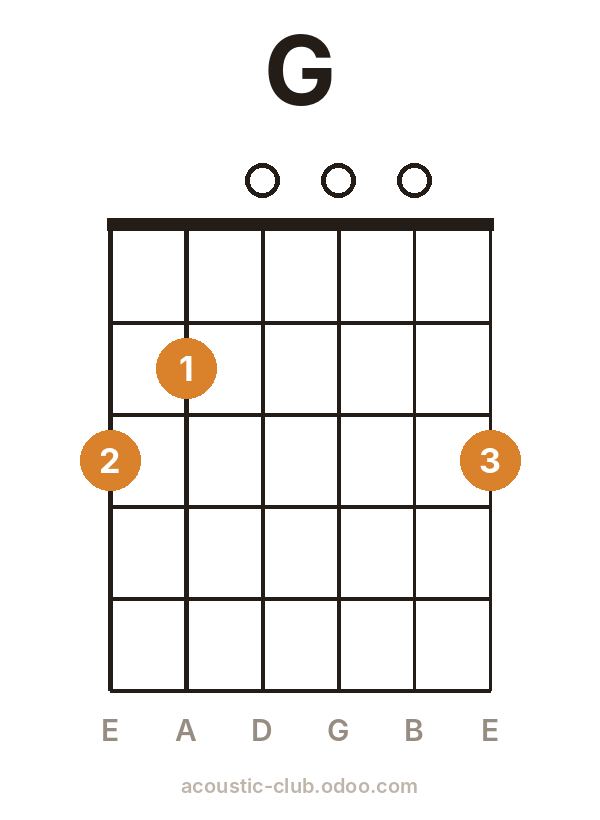
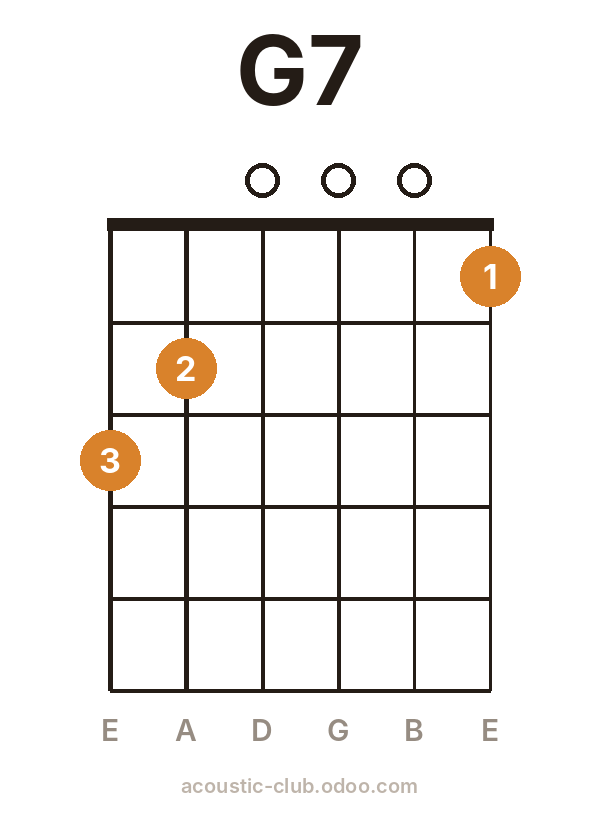
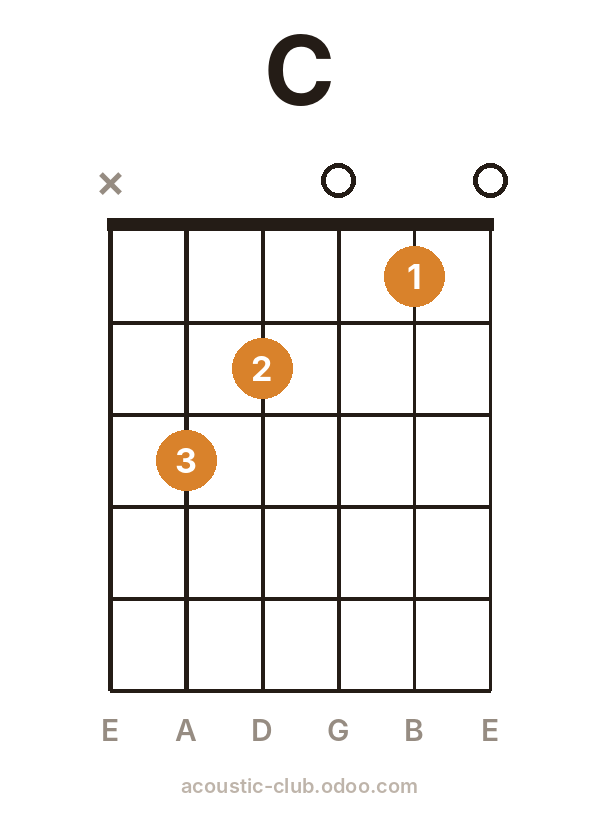
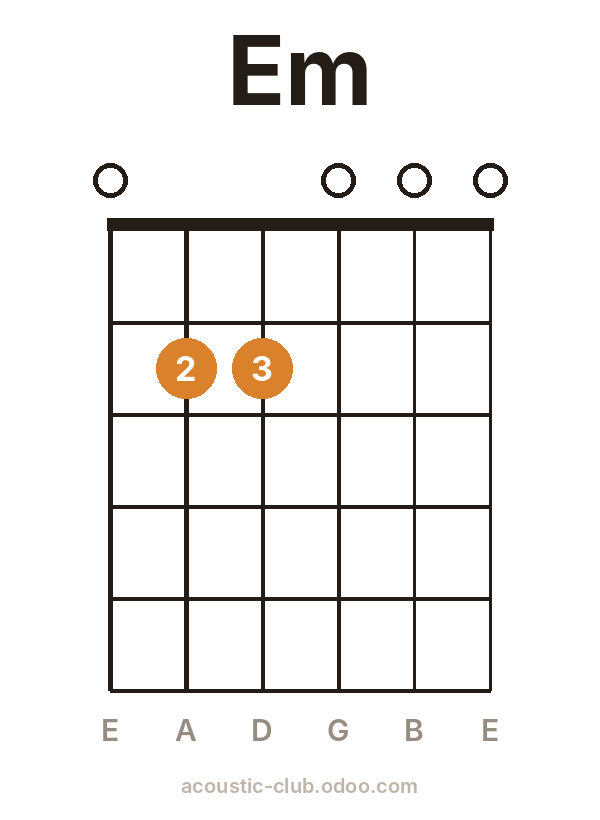
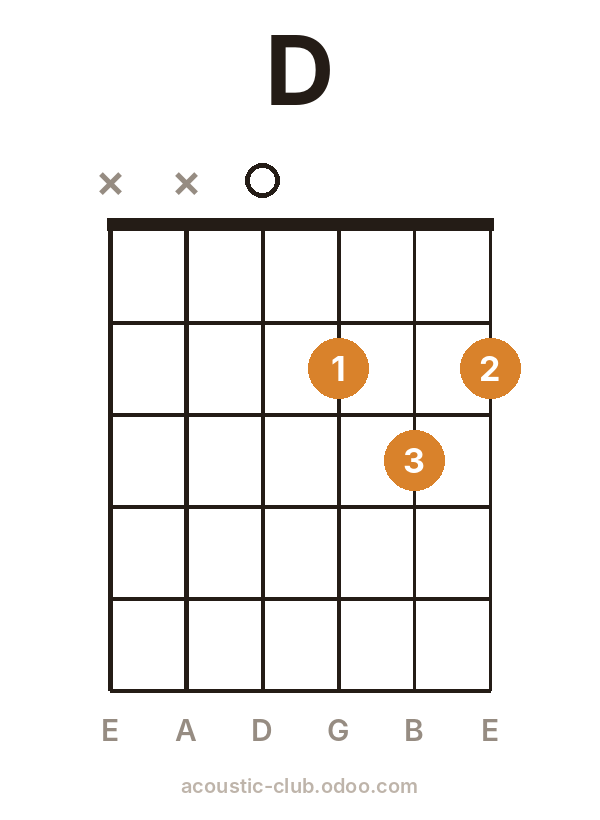
Waltz strum: D, D-U, D-U.
Chords & words — verse 1 (John Newton, 1779)
A-[G]mazing [G7]grace, how [C]sweet the [G]sound
That [G]saved a [Em]wretch like [D]me
I [G]once was [G7]lost, but [C]now am [G]found
Was [Em]blind, but [D]now I [G]see
Keyboard accompaniment (3/4)
Count one two three. Left hand: play the chord's root note (its letter name) on beat one. Right hand: play the chord shape on beats two and three. Oom-pah-pah.
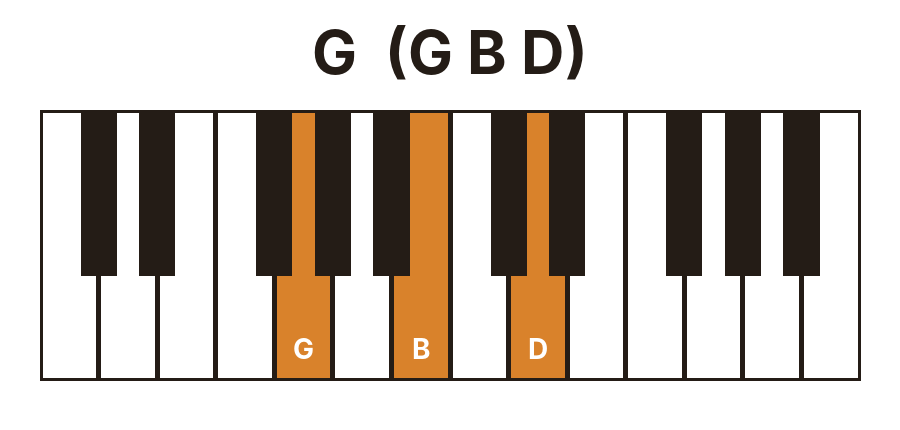
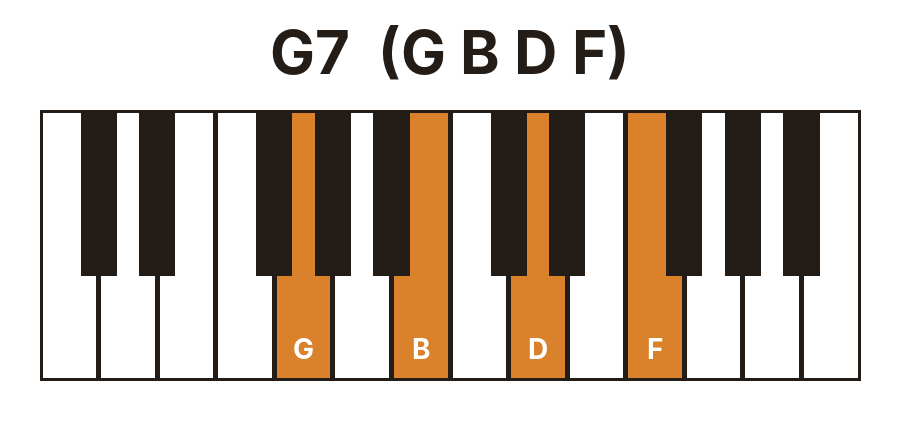
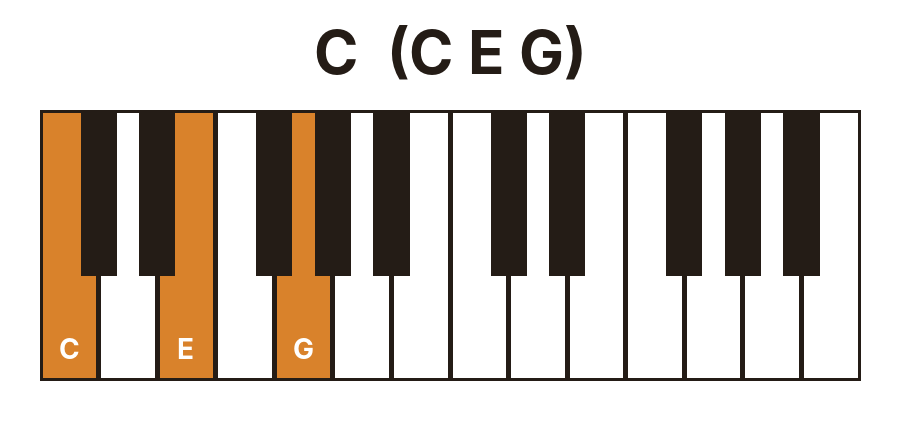
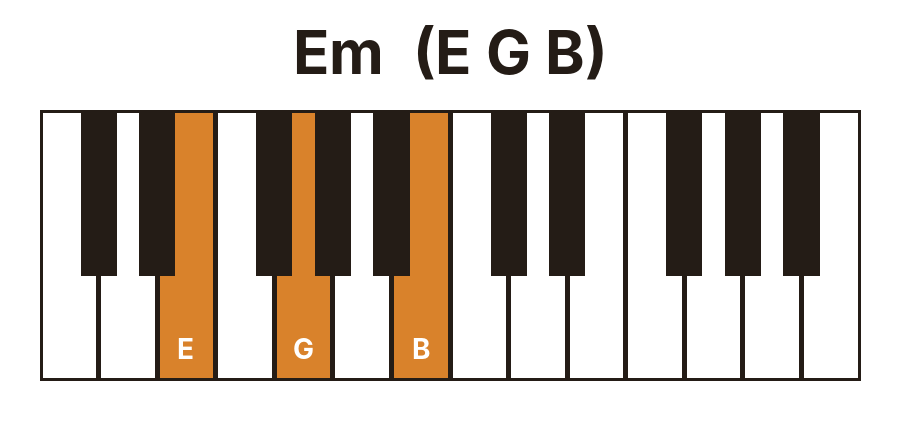
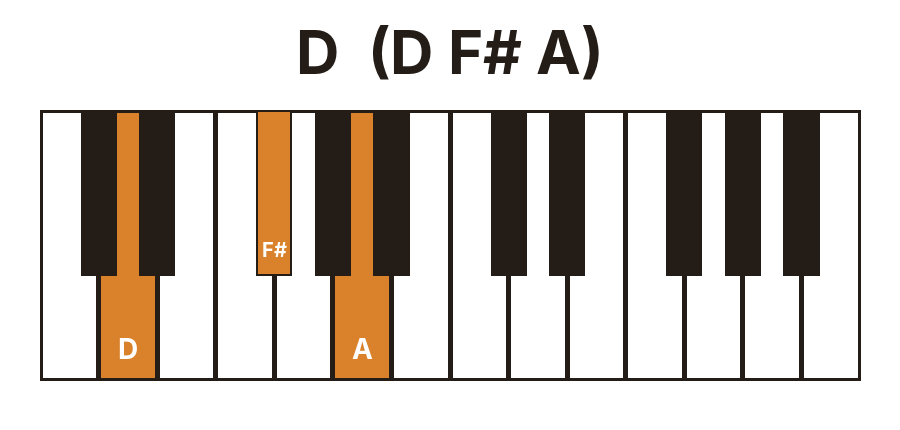
Chords & words — verse 1 (John Newton, 1779)
A-[G]mazing [G7]grace, how [C]sweet the [G]sound
That [G]saved a [Em]wretch like [D]me
I [G]once was [G7]lost, but [C]now am [G]found
Was [Em]blind, but [D]now I [G]see
Free to learn, free to print, free to play at any session.
Acoustic Club Sessions4. When the Saints Go Marching In
Traditional · 4/4 · Chords G, G7, C, D.
Folk strum: D - D U - U D U. Let the last "in" ring out.
Chords & words — traditional
Oh, when the [G]saints go marching in,
Oh, when the saints go marching [D]in,
Oh Lord, I [G]want to [G7]be in that [C]number,
When the [G]saints go [D]marching [G]in.
Keyboard accompaniment (4/4)
Count one two three four. Left hand: root note on beats one and three. Right hand: chord shape on every beat — or on two and four for a bouncier feel.
Chords & words — traditional
Oh, when the [G]saints go marching in,
Oh, when the saints go marching [D]in,
Oh Lord, I [G]want to [G7]be in that [C]number,
When the [G]saints go [D]marching [G]in.
5. Drunken Sailor
Traditional sea shanty · 4/4 · Chords Am, G.
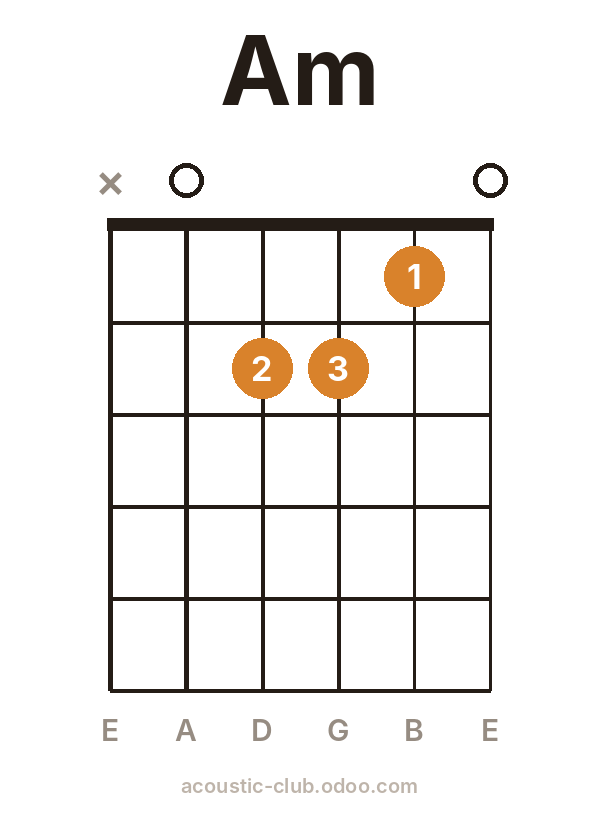
Down-up strum, full of energy. Stamp your foot on every beat.
Chords & words — traditional sea shanty
[Am]What shall we do with a drunken sailor?
[G]What shall we do with a drunken sailor?
[Am]What shall we do with a drunken sailor?
[G]Ear-ly in the [Am]morning!

[Am]Way hay and up she rises,
[G]Way hay and up she rises,
[Am]Way hay and up she rises,
[G]Ear-ly in the [Am]morning!
Keyboard accompaniment (4/4)
Count one two three four. Left hand: root note on beats one and three. Right hand: chord shape on every beat — or on two and four for a bouncier feel.
Only two shapes, and Am and G sit right next to each other — just move every finger down one white key.
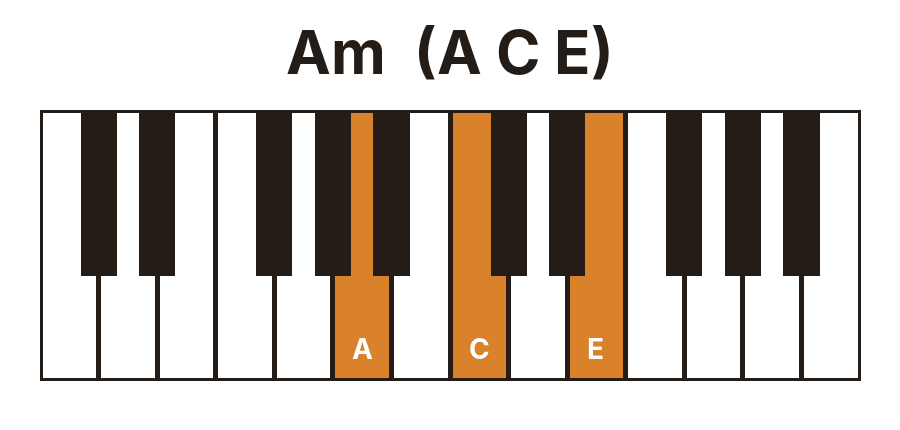
Chords & words — traditional sea shanty
[Am]What shall we do with a drunken sailor?
[G]What shall we do with a drunken sailor?
[Am]What shall we do with a drunken sailor?
[G]Ear-ly in the [Am]morning!

[Am]Way hay and up she rises,
[G]Way hay and up she rises,
[Am]Way hay and up she rises,
[G]Ear-ly in the [Am]morning!
Tips for learning a new song
01
Listen first
Hum or sing the tune before you play it. If you know how it goes, your ears will tell you when something is wrong.
02
Chords before rhythm
Practise the chord changes slowly with single strums or held chords before adding a pattern.
03
Loop the hard bit
Find the change that trips you up and repeat just those two chords until it is smooth.
04
Play it for someone
Even one listener changes everything. When you are ready, bring a song to a session.
The arrangements, chord charts and tabs on this page were written by Acoustic Club Sessions for learners. The underlying melodies and words are in the public domain.
Ready to play with others?
Every one of these songs works brilliantly in a group. Come and try them at a session.